Researcher

29 July 2024

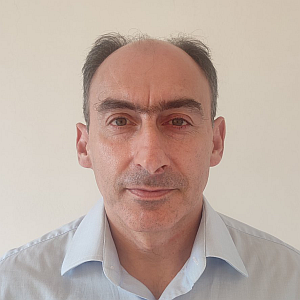
Andreas Psallidas

Dr. Andreas Psallidas is a researcher at the Institute of Nuclear & Particle Physics in NCSR Demokritos. He received his Bachelor’s degree and PhD in High Energy Particle Physics from the Physics department of the University of Ioannina. Afterwards, he worked for the NESTOR Institute for Deep Sea Research, Technology and Neutrino Astroparticle Physics on the Long Arm Marine Spectrophotometer (LAMS), an instrument that is designed to measure water transparency in situ and on the Light Intensity Measuring System (LIMS), an instrument used to measure sedimentation accumulation on glass spheres deployed in the deep sea. Then, he moved in the Compact Muon Solenoid (CMS) group of the Institute of Nuclear and Particle Physics of NCSR Demokritos as a postdoctoral research associate taking part in various areas of the CMS detector of the Large Hadron Collider (LHC) at CERN. These include reconstruction studies for the High Granularity Calorimeter (HGCAL), simulation and beam test studies for the Micromegas detectors with resistive pads, both part of the options (at that time) for the High Luminosity LHC. From 2015 up to 2022 he worked as a postdoctoral researcher based at CERN for the Department of Physics of the National Taiwan University and the HGCAL detector. He is a member of the Institute of Nuclear & Particle Physics in NCSR Demokritos starting from June 2022 and working in the ATLAS experiment.

Full list of publication is in here: https://inspirehep.net/literature?sort=mostrecent&size=25&page=1&q=Psallidas

27 January 2024

Giuseppe Bevilacqua

Dr Giuseppe Bevilacqua obtained his PhD from the University of Torino. He worked as postdoctoral associate and research fellow at the NCSR “Demokritos”, the RWTH Aachen University, the INFN Laboratories at Frascati and the University of Debrecen. He became staff at NCSR Demokritos in 2025 (Researcher grade C). His research activity is set in the context of High Energy Theory, with a solid background in computational physics and precision phenomenology at particle colliders. A distinctive feature of his work is the balance between developing computational tools, automation and practical applications to LHC phenomenology, with a special and continuous interest for Top Quark physics. He has been for many years developing and improving the HELAC-NLO Monte Carlo generator. He also worked to the construction and implementation of subtraction schemes for the computation of real-radiation corrections. He is co-author of several analyses of LHC processes based on state-of-the-art NLO calculations in the Standard Model. He has collaborated with experimental groups (ATLAS, CMS) by delivering dedicated theory predictions and assessing the dominant uncertainties. More recently he expanded his research interests towards BSM phenomenology, with special focus on Effective Field Theories (SMEFT) and their impact on the phenomenology of Top Quark production at the LHC. In parallel to that, he is collaborating with Dr Papadopoulos (INPP) to the goal of extending the HELAC framework to two-loop amplitude calculations while developing a method for two-loop amplitude reduction at integrand level. A full publication list can be found in Inspire http://inspirehep.net/author/profile/G.Bevilacqua.1]. Selected publications: Bevilacqua, D. Canko, C.G. Papadopoulos, A. Spourdalakis, "Towards numerical two-loop integrand reduction", JHEP 11 (2025) 069, https://link.springer.com/article/10.1007/JHEP11(2025)069 Bevilacqua, M. Lupattelli, D. Stremmer and M. Worek, “Study of additional jet activity in top quark pair production and decay at the LHC”, Phys. Rev. D 107 (2023) 114027,https://journals.aps.org/prd/abstract/10.1103/PhysRevD.107.114027 Bevilacqua, H.Y. Bi, H.B. Hartanto, M.Kraus, M. Lupattelli and M. Worek, “ttbb at the LHC: on the size of corrections and b-jet definitions”, JHEP 08 (2021) 008, https://link.springer.com/article/10.1007/JHEP08(2021)008 Bevilacqua, H.B. Hartanto, M. Kraus, T. Weber and M. Worek, “Off-shell vs on-shell modelling of top quarks in photon associated production”, JHEP 03 (2020) 154, https://link.springer.com/article/10.1007/JHEP03(2020)154 Bevilacqua, M. Czakon, M. Kubocz and M. Worek, “Complete Nagy-Soper subtraction for next-to-leading order calculations in QCD”, JHEP 10 (2013) 204, https://link.springer.com/article/10.1007/JHEP10(2013)204 Bevilacqua, M. Czakon, M.V. Garzelli, A. Van Hameren, A. Kardos, C.G. Papadopoulos, R. Pittau and M. Worek, “HELAC-NLO”, Comput.Phys.Commun. 184 (2013) 986-997, https://www.sciencedirect.com/science/article/pii/S0010465512003761?via%3Dihub    
3 December 2021

Evangelia Drakopoulou

Dr Evangelia Drakopoulou is a researcher in experimental (astro)particle physics with experience in neutrino experiments, Machine and Deep Learning techniques. She joined INPP in 2021. Dr Drakopoulou studied Applied Mathematical and Physical Sciences at the National Technical University of Athens obtaining her B.Sc. (2009) and MSc in Physics (2011). Her PhD in Elementary Particle Physics and specifically on “Muon and Neutrino energy Reconstruction for KM3NeT” was completed in early 2016. From 2016 to 2021 she worked as a Postdoctoral Research Associate at the University of Edinburgh and participated in international neutrino physics collaborations: Hyper-Kamiokande, TITUS/E61 [Japan] and ANNIE [Fermilab-USA].

She is currently working on KM3NeT (EU)  https://www.km3net.org and ANNIE (USA) https://annie.fnal.gov neutrino experiments. Her research interests include among others the development of machine and deep learning techniques to discriminate signal from background in neutrino detectors to (i) better understand neutrino interactions and (ii) allow the detection of neutrinos from astrophysical sources.

25 April 2019

Michail Axiotis

Axiotis Michail was born in 1976 in Athens, Greece. He studied physics at the University of Cyprus and received his PhD in 2007 from the Physics Department of the National Technological University of Athens. His PhD thesis was in nuclear structure of nuclei with mass A=50. More precisely he analyzed the high spins of 52Mn with gamma-ray spectroscopy and also using Total Absorption Spectroscopy techniques he studied the beta-decay of 52Fe. In parallel, from 1999 to 2003, he had a fellowship at the Laboratori Nazionali di Legnaro in Italy. There, he was member of the nuclear structure group and helped in the preparation and the running of almost all the experiments done with the GASP spectrometer. He also participated in experiments of the group at other laboratories like IReS, GSI and Cologne and in the building of the Clara spectrometer. Finally for a period of time between 2005 and 2006 he collaborated with Dr Demetriou on the development of global alpha-nucleus optical potentials for p-process nucleosynthesis.  
Skip to content