
Researchers

Dr. Georgios Daskalakis is a Director of Research at the Institute of Nuclear & Particle Physics (INPP) in the NCSR “Demokritos”, specializing in Experimental High-Energy Physics. He received his Bachelor’s degree (1994) from the Physics department at the National & Kapodestrian University of Athens (NKUA) and his PhD (1999) from the National Technical University of Athens (NTUA) working for the ALEPH/LEP experiment. He held a CERN Research Fellowship (2003-2005) and a Research Associate position (2005-2007) at the Physics Department, Imperial College of London, UK. Dr. G. Daskalakis was hired at INPP as Researcher grade C’ in 2007. He was promoted to Senior Researcher in 2013 and from May 2020 he serves as Research Director.
Dr. Georgios Daskalakis area of specialty is the Experimental High Energy Particle Physics & the Statistical Data Analysis. He is a member of the CMS/LHC Collaboration from 1997. He has significant expertise in electron/photon trigger, reconstruction and selection and he is editor of several publications using the proton-proton collision data at the energies of 7, 8 and 13 TeV in the areas of Standard Model physics (W & Z inclusive cross sections), Exotic physics (Searches for new heavy resonances) , Top physics ( tt+jets cross section). The full publication list can be found here.
Selected Publications
CMS Collaboration, “Search for high mass resonances in dielectron final state”, CMS-PAS-EXO-18-006, http://cds.cern.ch/record/2308270
CMS Collaboration, “Search for high-mass resonances in dilepton final states in proton-proton collisions at 13 TeV”, JHEP 1806 (2018) 120, CMS-EXO-16-047, CERN-EP-2018-027, DOI: 10.1007/JHEP06(2018)120 , e-Print: arXiv:1803.06292
CMS Collaboration, “Search for narrow resonances in dilepton mass spectra in proton-proton collisions at sqrt(s) = 13 TeV and combination with 8 TeV data”, Phys. Lett. B 768 (2017) 57, CMS-EXO-15-005, CERN-EP-2016-209, DOI: 10.1016/j.physletb.2017.02.010 , e-Print: arXiv:1609.05391v2
CMS Collaboration, “Search for a high-mass resonance decaying into a dilepton final state in 13 fb−1 of pp collisions at √s = 13 TeV”, Technical Report CMS-PAS-EXO-16-031, CERN, Geneva, 2016, http://cds.cern.ch/record/2205764
CMS Collaboration, “Search for physics beyond the standard model in dilepton mass spectra in proton-proton collisions at 8 TeV”, JHEP 04 (2015) 025, CMS-EXO-12-061, CERN-PH-EP-2014-272, DOI: 10.1007/JHEP04(2015)025, e-Print: arXiv:1412.6302
CMS Collaboration, “Search for heavy narrow dilepton resonances in collisions at 7 TeV and 8 TeV”, Phys. Lett. B 720 (2013) 63, CMS-EXO-12-015, CERN-PH-EP-2012-364, DOI: 10.1016/j.physletb.2013.02.003 , e-Print: arXiv:1212.6175
CMS Collaboration, “Measurement of the differential production cross section for top-quark pairs as a function of jet multiplicity in the lepton+jets final state at √s = 8 TeV with the CMS detector”, Technical Report CMS-PAS-TOP-15-006, CERN, Geneva, 2016, http://cds.cern.ch/record/2199266.
CMS Collaboration, “Measurement of the inclusive W and Z production cross sections in pp collisions at √(s) = 7 TeV with the CMS experiment”, JHEP 10(2011)132 & CMS PAS EWK-10-005
CMS Collaboration, “Measurements of Inclusive W and Z Cross Sections in pp Collisions at √(s) = 7 TeV”, JHEP 01(2011)080 & CMS PAS EWK-10-002
P. Adzic et. al.,“Intercalibration of the barrel electromagnetic calorimeter of the CMS experiment at start-up” ,JINST 3:P10007, 2008.

Dr. Andreas Germanos Karydas is Research Director at the Institute of Nuclear and Particle Physics of the National Center for Scientific Research "Demokritos" and Head of the XRF Laboratory. He holds a BSc in Physics from the University of Athens and received his Ph.D. in the field of Analytical Applications of Nuclear Techniques from the National Technical University of Athens (1994). Dr. Andreas Karydas has more than twenty-five (25) years of research experience, including six (6) years (2009-2015) as leader of the XRF group of the Nuclear Science and Instrumentation Laboratory (NSIL) at the International Atomic Energy Agency (IAEA) and one (1) year as senior staff of the IAEA Physics Section (2016). During his tenure at the IAEA he has been acted as Technical Officer in more than twenty (20) national and regional Technical Cooperation projects, whereas in 2015 he received a merit award in recognition of his contribution in the coordination, implementation and commissioning of a new beamline end-station at Elettra Sincrotrone Trieste. His research team interests focus towards: 1) the study of fundamental X-ray interactions with matter and de-excitation processes of ionized atoms, in particular of the X-ray Resonant Raman scattering and cascade X-ray emission and 2) the development of analytical methodologies, instrumentation and interdisciplinary applications of X-ray fluorescence and Ion Beam Analysis techniques, with emphasis on the areas of cultural heritage, materials science, environmental monitoring and biomedicine/pharmaceuticals. Dr. Andreas Germanos Karydas has coordinated for INPP many National, bilateral and European competitive projects, such as the ATT-29 (PEP ATTIKIS, 2006-2008), DEMO-Research (2006-2008), IAEA-CRP (2006-2008), PROMET FP6-INCO (509126, 2004-2008), IKYDA-DAAD (2004-2006) and a bilateral Greece-Slovenia project (2002-2003). Dr. Andreas Germanos Karydas has published more than 116 articles in international peer-review journals and more than 40 in peer-review proceeding of international conferences that have received over 1,300 citations, excluding self-citations. He is a member of the Advisory Board of the X-ray Spectrometry (2005) and Microchemical Journal (2015) and member of the international advisory committee of the European X-Ray Spectrometry and Technart conferences. Dr. Andreas Germanos Karydas has more than eighteen (18) invited talks at international conferences and has supervised two (2) PhDs, five (5) Master (MSc) and over ten (10) Diploma theses. Since 2009 he has been external evaluator of research proposals submitted within European funded projects such as SPIRIT, CHARISMA, IPERION CH. During the period 2012-2016 he has been president of the European X-Ray Spectrometry Association (EXSA). Dr. Andreas Germanos Karydas acted as National delegate in Regional IAEA Technical Cooperation projects (2006-2009, Nuclear-Techniques for the Protection of Cultural Heritage Artefacts) and in the G8 (2000-2005) and ENFORCE-TXRF (2019-2023) COST actions.
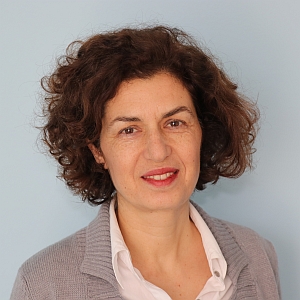
Started to work in INPP as a Researcher in Neutrino Astronomy at the end of 2008. Obtained a BSc in Physics in AUTH, Greece and carried out a PhD in Particle Physics at McGill University, Canada. For the requirements of my PhD I studied B0-B0 mixing with the ARGUS experiment. After completion of my PhD, I was appointed as a DESY Fellow and afterwards as a Senior Researcher at the Max Plank Institute, Munich, working at the H1 experiment at HERA. At H1 my responsibilities were linked to the SpaCal calorimeter of the experiment. I have also studied open charm production in Deep Inelastic Scattering (DIS), the charm contribution to the proton structure function F2c and di-jet production with an associated D* meson in DIS. At H1, I served as a coordinator of the SpaCal calorimeter group and as a convener of the heavy flavour working group.
Before joining INPP, I had lecturing responsibilities in the National Technical University of Athens (NTUA). As a Researcher in INPP, I have been involved in the KM3NeT experiment initially focusing on detector optimization studies and muon and neutrino energy reconstruction. My recent research relates to the development of methods to distinguish the signal from cosmic neutrinos from the atmospheric muon background, to reliably differentiate muon track and shower events in the KM3NeT detector and to the analysis of the KM3NeT data as the construction of the detectors is progressing. My research interests focus on the search for neutrinos from astrophysical sources. I have also been engaged in Knowledge Transfer activities, Equality-Diversity-and-Inclusion matters and I am serving as a member in several committees of the experiment.
A full list of publications can be found here

Dr. Christos Markou is an experimental physicist. His fields of expertise are Astrophysics, Particle Physics, instrumentation, distributed computing and data analysis, signal processing. Dr. Markou studied at Imperial College, University of London, UK, obtaining his B.Sc. (1985) and Ph.D. (1989) degrees in Physics. During his career, he has participated in several high energy particle physics experiments, at CERN, Geneva and DESY, Hamburg, and lately at KM3NeT. Before joining NCSR “D” he has held appointments at Imperial College and CERN.
He participates in KM3NeT, the international collaboration preparing the new generation underwater neutrino telescope to be deployed in the Mediterranean Sea. KM3NeT, a distributed research infrastructure to be deployed in 3 sites (France, Italy and Greece) is part of the ESFRI Roadmap. He is the Chairman of the KM3NeT Institution Board (since 2016), member of the Resources Review Board, the publication committee and is the Greek delegate to the KM3NeT ERIC. Dr. Markou is active in establishing a novel acoustic detector for ultra-high energy extragalactic neutrinos. He participates in several committees of NCSR Demokritos, the GSRT CERN advisory committee, and has led numerous research projects both at the National and International level. CM has been active in educational and outreach activities and has supervised 8 Ph.D. theses. He is the author of numerous research papers.
A complete list can be found at http://inspirehep.net/search?p=exactauthor%3AC.Markou.1