
HEP-theory


Kostas Filippas holds a diploma in Physics (2016) from the Physics Department of the National & Kapodistrian University of Athens (NKUA), with a thesis on 'Relativistic Interactions and Lie Symmetries of Differential Equations' under the supervision of M.Tsamparlis, and a MSc degree in Theoretical Physics (2018) from the Physics Department of the School of Applied Mathematics and Natural Sciences (SEMFE) of the National Technical University of Athens (NTUA), with a thesis on 'The AdS/CFT Correspondence: the Penrose Limit and the BMN Sector' under the supervision of K.Sfetsos and A.Kehagias. He holds a Ph.D. in Physics (2021) on ‘Duality and Integrability in Superstring and Gauge Field Theory’ from the Physics department of Swansea University, Wales UK,, worked under the supervision of C.Nunez. As a Ph.D candidate, he was a member of the Particle Theory and Cosmology group in Swansea. Since then he holds a Post-Doc position in INPP, Demokritos.
His publications include:
- “Holography for 2D N=(0,4) Quantum Field Theory”, K.Filippas, Phys.Rev.D 103 (2021) 8, 086003
- “Non-integrability of the Ω Deformation”, K.Filippas, Phys.Rev.D 101 (2020) 4, 046025
- “Non-integrability on AdS3 Supergravity Backgrounds”, K.Filippas, JHEP 02 (2020) 027
- “Integrability and Holographic Aspects of Six-Dimensional N=(0,1) Superconformal Field Theories”, K.Filippas, C.Nunez, J.van Gorsel, JHEP 06 (2019) 069
His research interests focus on superstring theory, supersymmetric gauge field theory, symmetry and instantons.
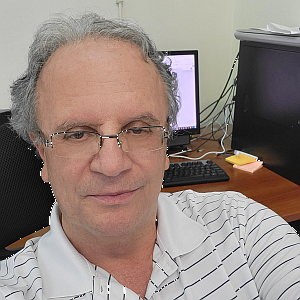
Education: B.A. Columbia University (1979), M.A. Physics, Harvard University (1981), Ph.D. Harvard University (1986). Thesis: Q-Balls (advisor: S. R. Coleman).
Career: U. Washington (postdoctoral research associate, 1986-88), Niels Bohr Institute (research associate, 1990-94).
Prizes: 1987, 3rd Prize-Gravity Research Foundation (USA) Awards: 1993, Carlsberg Foundation Fellowship (Niels Bohr Institute, Denmark)Research Interests : Particle Physics and Cosmology, Information Theory , Chaotic Dynamics and Complex Systems
RECENT PUBLICATIONS
[1] M.Axenides, E.Floratos and S.Nicolis , Arnol'd Cat Map Lattices, Phys.Rev.E 107 (2023) 6, 064206 [2] M.Axenides, E.Floratos , D.Katsinis and G.Linardopoulos , Cascade of instabilities in the classical limit of the Berenstein-Maldacena-Nastase matrix model, Phys.Rev.D 104 (2021) 10, 106002[3] M.Axenides, E.Floratos and S.Nicolis, The arithmetic geometry of AdS2 and its continuum limit , SIGMA 17 (2021) 004
[4] M.Axenides, E. Floratos, S. Nicolis, The quantum cat map on the modular discretization of extremal black hole horizons, Eur.Phys.J., C78 (2018) 412
SELECTED PUBLICATIONS
[1]. M. Axenides, E. Floratos, S. Nicolis, Modular discretization of the AdS2/CFT1 holography, JHEP 02 (2014) 109 [arXiv:1306.5670].
[2]. M. Axenides, E. Floratos, Strange Attractors in Dissipative Nambu Mechanics: Classical and Quantum Aspects, JHEP 04 (2010) 036 [arXiv:0910.3881].
[3]. M. Axenides, K. Dimopoulos, Hybrid dark sector: Locked quintessence and dark matter, JCAP 07 (2004) 010 [hep-ph/0401238].
[4]. M. Axenides, S. Komineas, L. Perivolaropoulos, E. Floratos, Dynamics of nontopological solitons: Q balls, Phys.Rev., D61 (2000) 085006 [hep-ph/9910388].
[5]A.Safian , S.R.Coleman and M. Axenides , Some Nonabelian Q-Balls , Nucl.Phys.B 297 (1988) 498-514.[6]. M. Axenides, R. H. Brandenberger, Primordial Fluctuations, Dark Matter, And Photon Oscillations, Phys.Lett., 134B (1984) 405.
[7]. M. Axenides, R. H. Brandenberger and M.S.Turner, Development of Axion Perturbations in an Axion Dominated Universe, Phys.Lett.B 126 (1983) 178-182.
Dr. Costas Papadopoulos is currently Director of Research at the Institute of Nuclear and Particle Physics, NCSR “DEMOKRITOS”. He served as research fellow, associate researcher or distinguished visiting scientist at CERN, the University of Durham, ETH-Zurich and the University of Debrecen. His research work covers a large area of theoretical high-energy physics with emphasis to particle physics phenomenology. He is the author of more than 150 publications, in International refereed Journals and conference proceedings. According to the INSPIRE database there are more than 14,000 citations on his published work (h-index 50). Major achievements include: the development of recursive equation approach to scattering amplitudes calculation and the resulting HELAC-PHEGAS computational system; the establishment of the OPP method to calculate virtual one-loop corrections along with the HELAC-NLO framework for arbitrary NLO QCD calculations; the SDE approach to multi-loop calculations. These novel methods and tools allow the detailed study of arbitrary scattering process and played, play and will play a crucial role in the physics analysis of large-scale experiments like LEP and LHC. He has participated, as scientist in charge, in more than 25 research projects funded by the European Union and the Greek General Secretariat for Research and Technology. He has also acted as the coordinator of one of the largest collaborations on theoretical particle physics in Europe, the HEPTOOLS Network that included 17 research teams, from 16 Research centers and 47 Universities worldwide. He has supervised or co-supervised the PhD work of more than 20 students and the post-doctoral research of 9 researchers. He has participated in more than 110 international conferences and workshops and has been invited in more than 30 Universities and research Institutes worldwide.
Full CV can be found here Five most important publications (INSPIRE, 15/2/2022): Published in: Nucl.Phys.B 763 (2007), 147-169. [Cited 737 times] Published in: Comput.Phys. Commun. 184 (2013), 986-997. [Cited 309 times] Published in: Comput.Phys.Commun. 132 (2000), 306-315. [Cited 278 times] Published in: JHEP 07 (2014), 088. [Cited 67 times] Published in: JHEP 04 (2017), 083. [Cited 86 times] For up-to-date information click here